About the programme

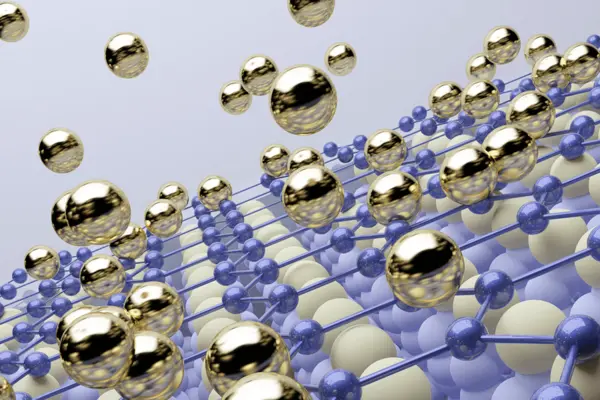
In nanoscience you explore the fascinating world of nanoscale systems in physics, chemistry and biology applying theoretical and experimental techniques. You may contribute to groundbreaking fundamental science or shape the technologies of tomorrow, and address key societal challenges in quantum technology, green energy or design of novel materials and biomedicine. The programme is offered in English, and international students are welcome.

What makes the programme at UCPH unique?

Nanoscience MSc offers a truly interdisciplinary education, combining insights from physics, chemistry, and biology to study matter at the nanoscale. You will gain access to cutting-edge laboratories and research environments within academic science and innovation. The flexible study plan allows you to design your own academic profile—ranging from broad cross-disciplinary competence to focused expertise within a chosen subfield.

Why is this programme relevant?

Many of today’s scientific and technological challenges arise at the nanoscale, such as clean energy, climate change, advanced electronics, and next-generation nanomedicine. Addressing these challenges requires knowledge across traditional disciplines. The programme provides an interdisciplinary foundation from quantum physics to materials science, and from molecules to life. Your expertise is in demand in academia and high-tech industies.

Admission and application

To apply for admission to the master's programme, you must be enrolled in or have completed either a qualifying bachelor's programme or another relevant Danish or foreign degree programme which is deemed relevant.

You apply for admission through the application portal.

Below you can read more about the admission requirements for the programme including which documents you must upload along with your application.

Educational background

You must meet a number of admission requirements, to apply for the master’s programme.  You can read about the various admission requirements below:

You have legal right of admission, if you hold a bachelor’s degree in:

  • Nanoscience from the University of Copenhagen

As an applicant with legal right of admission, you are guaranteed a place if you apply by the deadline. You can wait up to three years to exercise your legal right of admission from the time you complete your bachelor’s degree until you start your master’s degree.

Read more about legal right of admission

If you have completed one of the following bachelor’s degrees and meet the language requirement – English B – you automatically fulfil all the academic admission requirements.

From the University of Copenhagen:

  • Nanoscience (you have legal right of admission for the first 3 years)

From Aarhus University:

  • Nanoscience

Read about how to meet the language requirements

If you hold a bachelor’s degree, a professional bachelor’s degree or an equivalent qualification from a Danish or international university not listed above, you are eligible for admission if the programme includes the following:

  • A minimum of 30 ECTS within introductory physics (electromagnetism and quantum theory).
  • A minimum of 30 ECTS within introductory chemistry (organic, inorganic and physical).

The elements must account for a total of min. 90 ECTS.

You must also meet the language requirement for English B.

Read about how to meet the language requirements

Application deadlines

Applicants from within the EU, EEA and Switzerland

There are two application deadlines for Danish applicants and applicants from within the EU, EEA and Switzerland.

Study start in September

1 March at 23:59

The application portal opens on 16 January. You will receive a reply by 15 May.

Study start in February (legal right of admission only)

15 October at 23:59

The application portal opens on 15 August. You will receive a reply by 10 December.

Applicants from outside the EU, EEA and Switzerland

There are two application deadlines for applicants from outside the EU, EEA and Switzerland.

Study start in September

15 January at 23:59

The application portal opens on 15 November. You will receive a reply by 13 March.

Study start in February (legal right of admission only)

15 October at 23:59

The application portal opens on 15 August. You will receive a reply by 10 December.

How we prioritise your application

Find information about available places on the study programme, as well as the distribution of students admitted last year.

Admission statistics Nanoscience 2026
Available study places 30
Admission statistics Nanoscience 2025
Admitted (of which have start in February) 23 (10)
Admission distribution (legal right/other) 70% / 30%
Applicants 63
Age average 24
Nationality (dk/international) 70% / 30%

Students with a legal right of admission are always admitted. In the table above, you can see the distribution between legal right of admission applicants and other applicants for the most recent admission.

What is a legal right of admission and how long does it apply?

If there are more qualified applicants than the available study places, after applicants with legal right of admission are allocated, applicants will be prioritised according to the following criteria:

  • Total number of ECTS credits in relevant courses
  • Grades in relevant courses

Relevant courses include courses in introductory physics (electromagnetism and quantum theory) and introductory chemistry (organic, inorganic and physical).

How to apply

Choose the category below that fits you and read more about how to apply for admission. You will also find information about application deadlines and documentation on the websites.

Citizen in a country outside EU, EEA or Switzerland

Bachelor’s degree from Denmark

International bachelor’s degree

5 quick questions and answers

Starting in 2028, you can apply for focused 1-year master’s degrees, 2-year master’s degrees, and several new types of degrees for working professionals, combining study and relevant work. 

The new master’s opportunities are relevant for you if you wish to apply for a master’s degree from 2028. 

Read more about the master’s reform

To apply for a master’s degree, you must apply before the application deadlines.

Application deadlineApplicantsStudy start
15 January at 23:59Applicants with citizenship outside the EU, EEA, and SwitzerlandSeptember
1 March at 23:59Applicants with citizenship within EU, EEA, and Switzerland (incl. applicants with legal right of admission)September
15 October at 23:59Applicants with legal right of admissionFebruary

In addition, there are other deadlines you should be aware of. Including the deadline for accepting your study place.

Get an overview of all deadlines and important dates 

If you are a citizen of a country outside the EU, EEA, or Switzerland, you must pay the application deposit and tuition fee.

Read more about the application deposit and tuition fee

If you want to apply for admission to a master’s degree or to apply for re-admission, study change, transfer, or re-enrolment at the University of Copenhagen, you must apply through the application portal.

Once you have submitted your application, you can follow the application in the application portal.

See the guide to the application portal

Read more about applying for re-admission, study change, transfer, and re-enrolment

Your bachelor’s degree is the basis for assessing if you meet the admission requirements for the master’s degree.

In the curriculum you can see how many ECTS credits from other courses can be included in addition to your bachelor’s degree. These courses must be completed before you complete the bachelor’s degree. Courses completed between your bachelor’s and master’s degree cannot be included in the assessment.

Read more about the rules for supplementation

Programme structure

You begin your programme with the course "Structural Tools in Nanoscience" in which you are introduced to the most important techniques for structure determination including X-ray diffraction, scanning probe techniques (STM and AFM), and electron microscopy (TEM and SEM).

The remaining courses are restricted elective or elective. Restricted elective course are chosen from our list of core nanoscience courses, which are offered primarily by the departments of physics, chemistry and biology.

The elective courses can be chosen freely from all courses at The Faculty of Science. You can also follow elective courses at other faculties at the university (e.g. Faculty of Health and Medical Sciences) or at other institutions such as the Technical University of Denmark or Lund University in Sweden.

Do a project in practice or study abroad

Do you want to turn theory into experience or explore the world while you study? 

As part of your programme, you can use some of your elective courses to gain hands-on or international experience by doing an project in practice or choosing to study abroad.

Master's Thesis

The Master's thesis project is an independent research project which you do under supervision of a professor at the Faculty of Science. You can write a thesis worth 60 or 45 ECTS.

In practice, the work takes place in the research group of your supervisor, often one of the groups in the Nano-Science Center. Your supervisor is responsible for ensuring the feasibility of the project and for supervision throughout. On a day-to-day basis, you may work in close collaboration with other graduate students – sometimes with BSc students or with older, more experienced PhD students and postdocs.

You can also do your thesis work as part of a research and development team in the private sector. The working methods here are often the same as at the university. In either case, your supervisor will ensure that the academic content is of a high standard of quality.

Programme Overview

The Nanoscience programme can be structured in different ways, depending on the size of your thesis, and whether you start in September or February.

Below, you will find course tables showing the study structure if you start in September or February with a thesis worth 60 ECTS. 

Example 1: Study Start September, Thesis 60 ECTS

Compulsory courses: 7,5 ECTS
Restricted elective courses: 22,5 ECTS
Elective courses: 30 ECTS
Master's thesis: 60 ECTS

One block each year equals nine weeks of study and 15 ECTS. The table is primarily for guidance and may be subject to revision.

Year 1

Block 1Block 2Block 3Block 4
Structural Tools in NanoscienceRestricted elective courseRestricted elective courseRestricted elective course
Elective courseElective courseElective courseElective course

Year 2

Block 1Block 2Block 3Block 4
Thesis

Example 2: Study Start February, Thesis 60 ECTS

Study start in February is only for students with legal right of admission to the programme. Read about legal right of admission here >>

Compulsory courses: 7,5 ECTS
Restricted elective courses: 22,5 ECTS
Elective courses: 30 ECTS
Master's thesis: 60 ECTS

One block each year equals nine weeks of study and 15 ECTS. The table is primarily for guidance and may be subject to revision.

Year 1

Block 3
 
Block 4
 
Block 1
 
Block 2
 
Restricted elective courseRestricted elective courseStructural Tools in NanoscienceRestricted elective course
Elective courseElective courseElective courseElective course

Year 2

Block 3
 
Block 4
 
Block 1
 
Block 2
 
Thesis

Programme Curriculum

If you are more interested in the academic content, regulations, and examination requirements, you should consult the curriculum, which serves as the legal foundation for the programme.

There is both a curriculum specific to each degree programme and a general curriculum that applies across the faculty.

Please note that curricula are often revised annually. Any new versions will be published no later than during the spring semester.

Video: Josef and Line talk about the study programme in Nanoscience

Career opportunities

Upon completion of the master’s programme, you will obtain the title Master of Science in Nanoscience.

During the MSc Programme in Nanoscience, you can focus on the aspects of nanoscience that interest you.

You may use X-rays to investigate how enzymes catalyse in chemical reactions. You can study how quantum transport works in molecules or quantum devices, or you can focus on nanosensors in the development of new medicine.

You create your own academic profile by choosing from a wide range of restricted elective and elective courses, and by choosing the topic of your master's thesis.

During the programme you will learn to conduct independent research and you acquire a range of transferable skills such as research project management and data analysis.

Employment

The majority of graduates with an MSc in Nanoscience work in the private sector, often in high-tech companies within pharmaceuticals, IT, biotech, or green energy.

Some work as consultants or with patents. Around 40% of our graduates pursue a PhD and later work with research and development in the industry or at a university.

The programme organises match-making events between students and companies. These can lead to thesis projects or employment with a company upon graduation.

Student life

High quality education in English, a flexible study structure, excellent facilities, an international study environment, attractive and green campus areas, and the opportunity to experience life in Copenhagen, the cool capital of Denmark. These are some of the qualities about studying at Faculty of Science (SCIENCE) at University of Copenhagen that you can expect.

Throughout the year, various social activities are arranged for all SCIENCE students and for international students specifically. These activities include:

  • Introduction Days for new students 
  • A welcome programme for international students
  • International dinners, courses, and lectures
  • Sports activities such as fun runs or bicycle races
  • Career workshops

Students live in residence halls outside campus or share a flat in the Copenhagen area. You will find that the relatively small size of Copenhagen makes it easy to get around, even by bike.

Where Will I be Studying?

The Nanoscience programme is primarily based at North Campus.

The University’s North Campus is centrally located. It is home to scientific, pharmaceutical and health science research, and neighbour to the Copenhagen University Hospital (Rigshospitalet), Metropolitan University College, and Fælledparken.

Exciting building activities are going on at the campus areas at the moment, including the construction of a new Natural History Museum. Furthermore, North Campus is part of a coherent district of science, health and interdisciplinarity – Innovation District Copenhagen – which is being developed these years.

You can read more about campus life at the university here:

Testimonials

Read interviews with students and graduates from the Master of Science programme (MSc) in Nanoscience.

Interview with Monica-Elisabeta Lăcătușu from Romania.

I enjoy living in a big city. In Copenhagen there are so many things to do – a lot of cultural events, many places to go out, and a lot of different people, and the university is right in the heart of the city.

When I got my bachelor degree in physics from Al. I. Cuza in Iasi in Romania, I wanted to travel and study in another country. I spend one year in Norway working for an NGO, and I really liked Northern Europe so I looked at the universities in the area. University of Copenhagen is one of the best so I applied to get in nanoscience, and now I am here.

I choose to study Nanoscience because it gives me the opportunity to work both with physics and chemistry. I like that the master program has a great degree of freedom. There is only one mandatory course you need to follow, after that you can choose the courses that you want to create your own scientific profile. I am into physics so many of the courses I have chosen are within nanophysics.

The hierarchy in the groups is flat that is a big difference to the university that I come from in Romania. Even though I have only been here for seven months, I am already a part of a research group. We talk about the scientific problems and discuss the solutions with each other at group meeting where everybody can say what they think. I have started to look into what my Master’s theses will be about, and I spend much of my time at the Nano-Science Center.

When I am not at the university I spend much time doing voluntary work for different NGOs and The International House. It is not cheap to stay in Copenhagen so I also work some hours a week for a research group at the university.

When I finish my master’s I would like to travel again and maybe do a PhD.

After graduating, Monica-Elisabeta went on to do a PhD at the Technical University of Denmark. She now works as a data analyst in EIVEE, a software company.

Sepideh Hakim, from Iran, is studying Nanoscience.

It is not cheap to study in Copenhagen. But it is worth the money, though I got the chance to go to Gothenburg and study there for free. I chose Copenhagen instead, and I haven't regretted it for one moment.

My uncle spent 25 years in Denmark and he had told me lots of nice things about Copenhagen and the country as such. And when I checked the University of Copenhagen out in the global rankings and it turned out to be the 45th best in the world, my mind was made up.

I did physics in Iran but decided to switch to nanoscience for my Master degree. I believe Nanoscience is investigating unexplored aspects of the world, and it makes me feel I am part of an exciting research and study environment. There are lots of opportunities if you want to do experiments and write papers. From the beginning I was very interested in environmental projects and I can say that I have found it here in Copenhagen University: ''nanoscience in the context of an environmental project''.

I feel completely happy in Copenhagen. In Denmark everyone speaks very good English, which sets it apart from many other countries. There are lots of international higher education programmes in English. Even an old lady will help you in English, if you're standing there looking lost with a map in your hand. Unlike the prejudices you hear about Danes being cold and inhospitable to strangers, according to my experience the Danes are really amenable and welcome foreigners. They are interested in other cultures, and they're really helpful.

One of the things I really like about Denmark is the biking life - here I do bicycling a lot and I enjoy it very much. It gives you a feeling of safety with all those bike paths and facilities for biking in Copenhagen, and in the city it is easy to get around on bike.

Another good thing about studying in Copenhagen is that it is a good way to learn to live independently, by being far from my home - although I've missed my family a lot. I share a flat with some other students. That's also a completely new way of life for me. I am so happy to be studying here, and I am very hopeful for a good future in my education and in my life as well.

Sepideh later did a PhD in Nanoscience at University of Copenhagen and now works as a materials engineer at Grundfos.

Student life at UCPH

Read about student life at UCPH

What is student life like across the rest of the University of Copenhagen?

Find out where you can live, get more information about student grants (SU), student jobs, student discounts, and all the many other things that are part of student life.

Read about student life at UCPH

Get to know North Campus

Teaching takes place at North Campus, located close to Fælledparken. The Niels Bohr Institute, Panum, and the Maersk Tower are all part of the campus.

North Campus is home to both natural sciences and health sciences degree programmes.

Read about North Campus

Explore life in Copenhagen

Find out what it costs to live here, where students stay, and why so many internationals choose Copenhagen.

Read about living in Copenhagen

Contact student guidance

Questions about study choice and admission

Our student guidance are ready to assist you with answers to your questions about:

  • application procedure and the digital application portal
  • admission- and language requirements
  • documentation
  • study life
  • career opportunities
  • study choice or doubts
Contact study guidance

Did you not find what you were looking for?

You can find answers to questions most often asked by potential students in the FAQ. Read the FAQ

Questions about the application portal?

Check out the guide to the application porIn case of technical problems, contact IT-support:

Mail: it-service@adm.ku.dk 

Tel: +45 35 32 32 32

Location

  • North Campus, Universitetsparken 5, DK-2100 København Ø.

Similar programmes