About the programme
A new programme is on the way
It is expected that the last opportunity to apply for the MSc in Integrated Food Studies and Health will be for study start in September 2027.
From September 2028, a new one-year focused master’s programme is expected to be offered.
We will update this page when more information about the new programme becomes available.
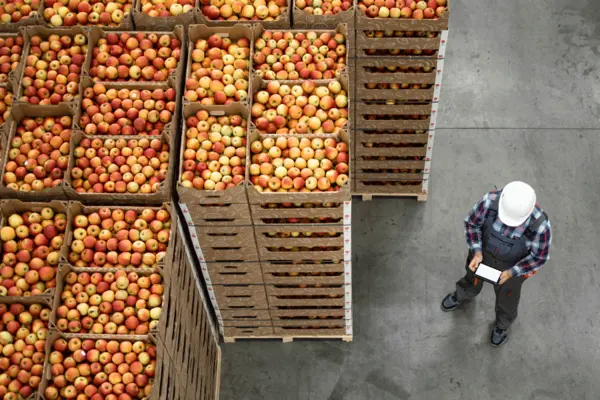
The MSc programme in Integrated Food Studies enables you to tackle problems related to the production and consumption of food.
The programme offers a unique interdisciplinary and holistic perspective on food and food systems.
With perspectives from natural, health and social sciences, you will study production, processing, distribution, and consumption of food products, as well as food-related aspects of societal issues such as green transformation, sustainability, obesity, and health.
Join us for Open House
-
11 November
Online presentation:
- 10:00 - 10:45
Admission and application
To apply for admission to the master's programme, you must be enrolled in or have completed either a qualifying bachelor's programme or another relevant Danish or foreign degree programme which the admission board assess fulfil the academic requirements.
You apply for admission through the application portal.
Below you can read more about the admission requirements for the programme including which documents you must upload along with your application.
Educational background
You must meet a number of admission requirements, to apply for the master’s programme. We do not offer pre-assessment of your educational background.
You can read about the various admission requirements below:
If you have completed one of the following bachelor’s degrees and meet the language requirements – English B – you automatically fulfil all the academic admission requirements.
From the University of Copenhagen:
- Food Science (fødevarer og ernæring)
- Natural Resources (naturressourcer)
- Sociology (sociologi), Anthropology (antropologi)
- Public Health (folkesundhedsvidenskab)
From the University of Southern Denmark:
- Sociology and Cultural Analysis; Public Health or Market and Management Anthropology
From Aarhus University:
- Public Health or Agrobiology with a specialisation in Food Science
From Aalborg University:
- Sociology or Sustainable Design or Techno Anthropology
From University College Copenhagen:
- Global Nutrition and Health
- Nutrition and Health
From VIA University College:
- Global Nutrition and Health
- Nutrition and Health
From University College South Denmark:
- Nutrition and Health
From University College Absalon:
- Nutrition and Health
From Business Academy Aarhus:
- Food Technology and Application
If you hold a bachelor’s degree, a professional bachelor’s degree or an equivalent qualification from a Danish or international university not listed above, you are eligible for admission if the programme includes the following:
30 ECTS within the field of food science
or
30 ECTS within the field of natural science
or
- 30 ECTS within the field of sociology and/or anthropology
You must also meet the language requirements for English B.
Documentation
As part of your application, you must include a number of documents, which vary depending on your educational background.
Below, you can see what documentation you need to enclose your application.
If your study programme automatically meets the admission requirements, you must upload the following documents with your application:
Compulsory
- Transcript of records
- Description of the bachelor’s programme
- Course descriptions for passed courses
- Self-assessment form
- Proof of language proficiency
- Copy of passport/national ID card
If relevant with your background:
- Proof of passed master's courses, incl. course descriptions
- Receipt of payment of application deposit
- Documentation for relevant employment or entrepreneurial activity
If you have another Danish or international education, you must upload the following documents with your application:
Compulsory
- Transcript of records
- Grade Point Average (GPA)
- Course descriptions for passed courses
- Self-assessment form
- Proof of language proficiency
- CV (Curriculum Vitae)
- Copy of passport/national ID card
If relevant with your background:
- Proof of passed master's courses, incl. course descriptions
- Receipt of payment of application deposit
- Documentation for relevant employment or entrepreneurial activity
How we prioritise your application
Find information about available places on the study programme, as well as the distribution of students admitted last year.
| Admission statistics Integrated Food Studies 2026 | |
|---|---|
| Available study places | 25* |
| Admission statistics Integrated Food Studies 2025 | |
|---|---|
| Admitted (of which have start in February) | 27 (0) |
| Admission distribution (legal right/other) | 0% / 100% |
| Applicants | 111 |
| Age average | 28 |
| Nationality (dk/international) | 26% / 74% |
* The student intake for the programme is capped. The number of available places applies to the academic year 2026/27.
Read about capping of study programmes in relation to available study places (in Danish)
If the number of qualified applicants exceeds the number of available places, applicants will be prioritised according to the following criteria:
- Relevance of their study program (including elective courses and project work) defined as ECTS credits within the subject areas of food science and social science studies of food
- Grade-point average of the qualifying degree
How to apply
Choose the category below that fits you and read more about how to apply for admission. You will also find information about application deadlines and documentation on the websites.
Citizen in Denmark, EU EEA or Switzerland
Bachelor’s degree from Denmark
International bachelor’s degree
Citizen in a country outside EU, EEA or Switzerland
Bachelor’s degree from Denmark
International bachelor’s degree
5 quick questions and answers
Starting in 2028, you can apply for focused 1-year master’s degrees, 2-year master’s degrees, and several new types of degrees for working professionals, combining study and relevant work.
The new master’s opportunities are relevant for you if you wish to apply for a master’s degree from 2028.
Your bachelor’s degree is the basis for assessing if you meet the admission requirements for the master’s degree.
In the curriculum you can see how many ECTS credits from other courses can be included in addition to your bachelor’s degree. These courses must be completed before you complete the bachelor’s degree. Courses completed between your bachelor’s and master’s degree cannot be included in the assessment.
Regrettably, the University of Copenhagen does not offer pre-assessment of your educational background to determine whether you qualify for admission.
The assessment process only begins once we have received your application. You can prepare by comparing your courses with the admission requirements.
If you are a citizen of a country outside the EU, EEA, or Switzerland, you must pay the application deposit and tuition fee.
If you want to apply for admission to a master’s degree or to apply for re-admission, study change, transfer, or re-enrolment at the University of Copenhagen, you must apply through the application portal.
Once you have submitted your application, you can follow the application in the application portal.
See the guide to the application portal
Read more about applying for re-admission, study change, transfer, and re-enrolment
Programme structure
The teaching takes the form of a varied combination of lectures, workshops, and practical and theoretical exercises. The compulsory courses include practical work in food labs.
During the first year, you follow a number of compulsory courses. In the second year, you have the option of taking elective courses from the wide range on offer at the University of Copenhagen.
Collaboration with companies and institutions in the food sector is a high priority for the study programme. The courses therefore include presentations by people who work with issues related to the programme’s subject areas. Some courses include visits to companies and institutions.
Do a project in practice or study abroad
Do you want to turn theory into experience or explore the world while you study?
As part of your programme, you can use some of your elective courses to gain hands-on or international experience by doing an project in practice or choosing to study abroad.
Master's Thesis
The programme concludes with a master’s thesis of your choice worth 30 or 45 ECTS (corresponding to six or nine months of study). The thesis is written either individually or in groups, usually on a specific research problem related to a company or institution in the food sector.
Examples of thesis subjects:
- Local Food Supply: What is the potential for establishing local food supplies for public-sector institutions in the City of Copenhagen?
- Food Waste in Restaurants: Working with companies to develop tools to minimise food waste.
- The Food Legislation From the Perspective of Small Producers: How do small producers view co-operation with the Danish Veterinary and Food Administration, and how does this affect the implementation of new legislation concerning small producers?
- Meat Consumption Among Single Men: Which attitudes and practices does this population group have when it comes to meat consumption?
- Food Strategies and Networks in Local Municipalities: What actions and efforts promote local authorities’ food initiatives and support sustainable development?
- Food Experiences at Festivals: What are the food practices of festival-goers? What influences people’s food choices at a temporary event?
- Consumption of Organic Fish: Questionnaire survey of attitudes and taste test.
Programme Overview
The programme can be structured in two ways, depending on the size of your thesis:
Course table, Thesis 30 ECTS
Compulsory courses: 60 ECTS
Elective courses: 30 ECTS
Thesis: 30 ECTS
One block each year equals nine weeks of study and 15 ECTS. The table is primarily for guidance and may be subject to revision.
Year 1
| Block 1 | Block 2 | Block 3 | Block 4 |
|---|---|---|---|
| Food Systems and Transition | Sustainable Innovation and Transformation in Agri-Food Systems | Food Concept Design | Sustainable Food Systems and Diets |
| Introduction to Social Science Methods | The Sociology of Food and Eating | Meal Systems and Technology | Food and Meal Consumer Research |
Year 2
| Block 1 | Block 2 | Block 3 | Block 4 |
|---|---|---|---|
| Elective course | Elective course | Thesis | |
| Elective course | Elective course | ||
Course table, Thesis 45 ECTS
Compulsory courses: 60 ECTS
Elective courses: 15 ECTS
Thesis: 45 ECTS
One block each year equals nine weeks of study and 15 ECTS. The table is primarily for guidance and may be subject to revision.
Year 1
| Block 1 | Block 2 | Block 3 | Block 4 |
|---|---|---|---|
| Food Systems and Transition | Sustainable Innovation and Transformation in Agri-Food Systems | Food Concept Design | Sustainable Food Systems and Diets |
| Introduction to Social Science Methods | The Sociology of Food and Eating | Meal Systems and Technology | Food and Meal Consumer Research |
Year 2
| Block 1 | Block 2 | Block 3 | Block 4 |
|---|---|---|---|
| Elective course | Thesis | ||
| Elective course | |||
Programme curriculum
If you are more interested in the academic content, regulations, and examination requirements, you should consult the curriculum, which serves as the legal foundation for the programme.
There is both a curriculum specific to each degree programme and a general curriculum that applies across the faculty.
Please note that curricula are often revised annually. Any new versions will be published no later than during the spring semester.
Video: Dorottya and Astrid talk about their studies in Integrated Food Studies.
Career opportunities
Upon completion of the master’s programme, you will obtain the title Master of Science in Technology (Integrated Food Studies).
How do social structures and actors such as politicians, consumers and industry form our food systems? How can we understand and improve the transition of food systems and the complex problems associated with food production, processing, and consumption in a modern globalised world?
These are the overarching questions addressed by the Master of Science (MSc) in Integrated Food Studies.
During the study programme, you will gain an understanding of the sociological aspects of the role of food in society and learn to work with different methods of studying food systems and consumption. Thus, you become an expert in innovative solutions aimed at food waste, combating climate change, ensuring sustainability, and addressing environmental problems associated with food production and consumption.
The compulsory courses provide an in-depth introduction to food systems and transition, social-science theory and methods, and food science approaches. You acquire skills in qualitative and quantitative methods of working with consumption and food systems.
Other courses focus on food science methods and approaches, including practical work in food labs. You take part in a cross-disciplinary course on sustainable meals, involving input from four different disciplines (social science, food science, plant science, nutrition). You also attend classes in innovation, where you acquire skills for concrete development work in the field of food.
Graduates of the MSc in Integrated Food Studies are able to:
- Handle complex issues within the food sector that require an interdisciplinary approach.
- Apply relevant theories and research methods to analyse current problems in the food sector.
- Propose innovative ways to change food systems, including the production, distribution, and organisation of private or public meal services.
Employment
Graduates have a range of career opportunities in the food sector:
- In the private part of the food sector – e.g., the food industry and retail trade – you can work with management, strategic planning, and innovative design, or manage change projects in food-related organisations and companies.
- In the public sector, you can work with strategic development and consultancy, as well as preparing and implementing policies in the food area.
- You will be able to work with the strategic development and implementation of public and private meal services. This could involve, for example, developing local authority meal services for elderly people, designed to reduce food waste and improve health.
- Graduates can work with food systems at international level e.g., in the EU, the UN, or international NGOs.
- You can also set up your own business, drawing on the study programme’s broad knowledge base in nutrition, design, consumption, and policy development.
Read three different career portraits from alumni

Studying a master's degree does open doors and it is invaluable to have the experience of focusing on one topic in such detail.
Clara, Project leader at Stadsbruk Europe


What do you do?
I am part of the quality department at Coop Denmark where we work to ensure food safety in retail. In my position, I specifically work with implementing electronic own-check programs in Coops +1000 retail stores, supporting the change process and answering questions relating to food safety.
Part of my job is also to make instruction manuals both in written form and video content, as well as to further develop the program to best support the many different and complex aspects of food safety and quality.
How did you end up in your current job?
During my studies I worked different jobs, all related to food in some way. Before I started my PBA, I spend half a year at Suhrs Højskole learning and having fun with cooking. While studying I worked at Frugtformidlingen, Suhrs Højskole and Grød before I started in a student position in Kitchen Collective. Right before graduating from Integrated Food Studies, I started working full time in Kitchen Collective where I stayed until I got the job at Coop in June 2021.
I always enjoyed working while studying. I was never very conscious about which way to go and never had a career plan of sorts, but I found that network and willingness to try out different things can truly take you places. I gained invaluable experience and met some very inspiring people in all the jobs.
Which academic skills do you use most in your work life?
I use what I learned at the Integrated Food Studies degree every single day. Working in a big corporation, everything from stakeholder analysis to design thinking and communication strategies are key skills. I have a broad knowledge about food culture, quality and food systems which is a strong foundation for succeeding in my tasks. I believe that working in groups during my studies enables me to work efficiently in teams and in projects.
Another thing that really struck me after graduating and entering the job market is to never underestimate how trained you are as a student or graduate of Integrated Food Studies in processing complex information and communicating this in different ways to different target groups.
I personally find that I am also very comfortable with having my work assessed by my colleagues and have no fear of public speaking (thanks to oral exams and presentations). These might seem like small matters, but they mean a lot in daily work life.
A good advice: What do you want to tell a prospective student?
My advice would be to engage in as many activities in the study environment as possible and appreciate being surrounded by people who share your interest in the world of food. It’s over before you know it.
Unless you continue within academia, this might be the only time in your life you have the opportunity and time to immerse yourself in a field that way. I cannot recommend applying for a student job enough. You will gain invaluable network and experience and, for me at least, I learned a lot from putting theory into practice along the way.

What do you do?
I am the Head of Communication and Project Manager at Food Nation, a public-private partnership established by the Danish government and leading private organisations and companies. We are working as a branding consortium for the Danish agriculture and food sector, meaning that we create awareness internationally of Denmark as a frontrunner within innovative, sustainable and effective food production all linked to the UN Sustainable Development Goals. We also work as a gateway for international stakeholders seeking information about Danish agriculture and food solutions.
In my day-to-day job, I have the overall responsibility for Food Nations global communication that we share through our webpage, social media channels, YouTube, podcasts etc. Furthermore, I work with planning and executing events with representatives from the Danish and international food scene. We also have a Visitor Centre in both Copenhagen and Aarhus where we receive delegations (public authorities, organisation, companies) who are eager to learn more about Denmark as a food nation or establish new partnerships.
How did you end up in your current job?
During my bachelor’s degree, I had two main internships. I had a clear vision of where I would like to do internships, as I had a big interest within organics and animal welfare. I got the first internships at the Danish Veterinary and Food Administration, where I worked with a project about the possibilities and challenges with the organic cuisine label in larger kitchens. The second internship I had at the Danish Agriculture and Food Council in the organic department, where I helped plan and execute on the event “Sofari”, where people can come visit an organic pig farm in Denmark.
After the second internship I was employed as a student at the Danish Agriculture and Food Council to continue the work and when I started my master’s degree, I got a new student position at the Danish Veterinary and Food Administration in the department where I were during my first internship. The choice of the internships was very conscious, and I had a plan for what I would gain from being an intern at the different places. I thought a lot about the future possibilities and therefore chose some large organisations, where there are many different focus areas and thus work opportunities.
After my graduation and my two years as a student, I was offered a position at the Danish Veterinary and Food Administration as a project manager continuing the work with the organic cuisine label among others. With time, I also worked with the Danish animal welfare label and ended up working with communication and large B2C and B2B campaigns across all the departments in the Danish Veterinary and Food Administration. After working two years full-time at the Danish Veterinary and Food Administration, I got a job at Food Nation as a project manager. I took the job, as I wanted to broaden my knowledge more towards export, sales and marketing and to have a more international outreach.
Which academic skills do you use most in your work life?
100% project management and the ability to think creatively and innovative. From my studies, I have a very broad knowledge about the global agriculture and food systems and the challenges we are facing concerning climate change etc. I believe that I am able to see things from many different perspectives and have a very holistic approach towards the food system in general because of my education.
A good advice: What do you want to tell a prospective student?
I must say that a relevant student job is central. I very strongly believe that I would not be where I am today if I had not taken those choices of beings strategic with my internships and student jobs.
Therefore, my best advice is to figure out what you find interesting and then look for ways to works with this in practice. It does not have to be in a student position but it could also be through an internship or volunteer work. The most important thing is to get out there and get some good contacts.
Student life
High quality education in English, a flexible study structure, excellent facilities, an international study environment, attractive and green campus areas, and the opportunity to experience life in Copenhagen, the cool capital of Denmark. These are some of the qualities about studying at Faculty of Science (SCIENCE) at University of Copenhagen that you can expect.
Throughout the year, various social activities are arranged for all SCIENCE students and for international students specifically. These activities include:
- Introduction Days for new students
- A welcome programme for international students
- International dinners, courses, and lectures
- Sports activities such as fun runs or bicycle races
- Career workshops
Students live in residence halls outside campus or share a flat in the Copenhagen area. You will find that the relatively small size of Copenhagen makes it easy to get around, even by bike.
Where Will I be Studying?
The Integrated Food Studies programme is primarily based at Frederiksberg Campus.
The Frederiksberg Campus hosts part of the Faculty of Science and the veterinary area of Faculty of Health and Medical Sciences. It is located a few kilometres west of the city centre in beautiful green surroundings, and Frederiksberg is a popular residential area. The Gardens, which are part of the Frederiksberg Campus, are popular with both students and locals. In the summer months, you can drop by Café Væksthuset, which is located in an old greenhouse, for a cup of freshly brewed coffee and a delicious sandwich.
At campus, you can join student clubs and societies of a more or less academic nature. Regardless of whether you are interested in choral singing, sports, the theatre or a special academic subject, there is a club for you.
Student life at UCPH
Read about student life at UCPH
What is student life like across the rest of the University of Copenhagen?
Find out where you can live, get more information about student grants (SU), student jobs, student discounts, and all the many other things that are part of student life.

Get to know Frederiksberg Campus
Teaching takes place at Frederiksberg Campus, which is located in green surroundings between Rolighedsvej, Thorvaldsensvej, and Bülowsvej.
Degree programmes within natural sciences and health sciences are based here.
Explore life in Copenhagen
Find out what it costs to live here, where students stay, and why so many internationals choose Copenhagen.
Meet us
See how you can meet the master's programme in Integrated Food Studies.

Contact student guidance
Questions about study choice and admission
Our student guidance are ready to assist you with answers to your questions about:
- application and admission procedure
- admission- and language requirements
- documentation
- re-admission, transfer or change of programme
- study choice or doubts
Did you not find what you were looking for?
You can find answers to questions most often asked by potential students in the FAQ. Read the FAQ
Questions about the application portal?
Check out the guide to the application portalIn case of technical problems, contact IT-support:
Mail: it-service@adm.ku.dk
Tel: +45 35 32 32 32
Location
- Frederiksberg Campus, Thorvaldsensvej 40, DK-1871 Frederiksberg.
Similar programmes

Agricultural Economics
Learn how economic incentives regulates the consumption and production of food.

Food Innovation and Health
Study and work with the development of healthy, sustainable, and tasty products.

Food Science and Technology
Focus on future foods' taste, health, sustainability, quality and safety.

Global Health
You study the interrelated determinants impacting global health and disease.

Find your master's degree programme
See which master's degree programmes your bachelor qualifies for