

Section for Food Microbiology, Gut Health, and Fermentation
Our section focuses on cutting-edge research in microbiology, particularly in areas such as the gut microbiome and health, food fermentation, starter culture functionality, food preservation, microbiological safety, and quality assurance.

About the section
We conduct both basic and applied studies, spanning from the molecular and single-cell levels to operational food production. Our research investigates foodborne bacteria, bacteriophages, yeasts, and molds by examining their interactions with food in various processing steps, on equipment surfaces, and in gastrointestinal matrices.
Through ecological and metabolic studies, we harness microbes to enhance sensory characteristics, extend shelf life, develop new products, improve health, and prevent the growth of spoilage and pathogenic bacteria. Additionally, we explore new technologies and approaches to ensure the microbiological quality and safety of food, feed, and water.
Section leader
Dennis Sandris Nielsen
Professor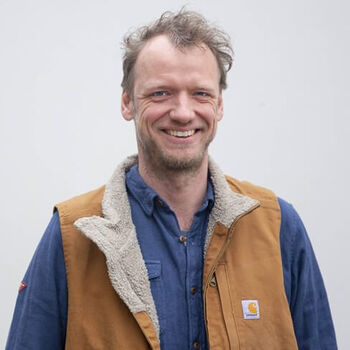


Resources
Our section is equipped with a wide range of analytical facilities, including high-throughput sequencing, qPCR, confocal laser scanning microscopy and specialized equipment for studying and manipulating single cells.
Collaboration
The section for Food Microbiology, Gut Health and Fermentation is always open for collaborations with both academic institutions and private industry. This can be at any level from joint Bachelor's and Master's projects to long-term research collaborations
Whether you seek expertise in fermentation, gut microbiomes, food safety, or molecular biology, don't hesitate to reach out to learn more about our research, collaborations, and how we contribute to advancing knowledge in microbiology and food science.
Student projects
If you as a student are interested in doing a BSc, MSc or another type project (e.g. “Project outside course scope, “PUK”) in our section please take a look under our Research Areas and reach out to the relevant principle investigators. Find all of the Department's project proposals here.
Software and digital resources
All downloadable material listed on these pages - appended by specifics mentioned under the individual headers/chapters - is available for public use. Please note that while great care has been taken, the software, code and data are provided "as is" and that Department of Food Science, Section for Food Microbiology, Gut Health and Fermentation at UCPH does not accept any responsibility or liability.
Course material for handling 16s data using R with phyloseq and other packages
https://mortenarendt.github.io/MicrobiomeDataAnalysis/index.html
Sparse partial least squares regression and classification using a phylogenetic similarity penalty
ASCA and permutation testing for non-orthogonal designs
https://github.com/mortenarendt/ASCA
Ref:
Rasmussen, M.A., Khakimov, B., Engel, J. and Jansen, J., 2024. Permutation Strategies for Inference in ANOVA‐Based Models for Nonorthogonal Designs Including Continuous Covariates. Journal of Chemometrics, p.e3580. (See publication)
Vertical transfer of microbes using individual ASV analysis using a combined meta analysis statistics.
https://github.com/mortenarendt/VagTransfer
https://github.com/mortenarendt/MBtransfeR
Refs:
Rasmussen, M.A., Thorsen, J., Dominguez-Bello, M.G., Blaser, M.J., Mortensen, M.S., Brejnrod, A.D., Shah, S.A., Hjelmsø, M.H., Lehtimäki, J., Trivedi, U. and Bisgaard, H., 2020. Ecological succession in the vaginal microbiota during pregnancy and birth. The ISME journal, 14(9), pp.2325-2335. (See publication)
Mortensen, M.S., Rasmussen, M.A., Stokholm, J., Brejnrod, A.D., Balle, C., Thorsen, J., Krogfelt, K.A., Bisgaard, H. and Sørensen, S.J., 2021. Modeling transfer of vaginal microbiota from mother to infant in early life. Elife, 10, p.e57051. (See publication)
Data fusion of vastly different data-sources obtained on the same set of samples done by using kernel transformation coupled with graphical modelling using graphical LASSO.
https://github.com/mortenarendt/KerGLASSO
Refs:
Nørgaard, S.K., Linder‐Steinlein, K., Eliasen, A.U., Stokholm, J., Chawes, B.L., Bønnelykke, K., Bisgaard, H., Smilde, A.K. and Rasmussen, M.A., 2021. On using kernel integration by graphical LASSO to study partial correlations between heterogeneous data sets. Journal of Chemometrics, 35(10), p.e3324. (See publication)
Nørgaard, S.K., Følsgaard, N., Vissing, N.H., Kyvsgaard, J.N., Chawes, B., Stokholm, J., Smilde, A.K., Bønnelykke, K., Bisgaard, H. and Rasmussen, M.A., 2023. Novel Connections of Common Childhood Illnesses Based on More Than 5 Million Diary Registrations From Birth Until Age 3 Years. The Journal of Allergy and Clinical Immunology: In Practice, 11(7), pp.2162-2171. (See publication)
Bi-linear factorization of matrices with a generalized linear mapping (|Rb|1 < L) penality on the parameters.
https://github.com/mortenarendt/genL1
Ref:
Arendt Rasmussen, M., 2017. Generalized L1 penalized matrix factorization. Journal of Chemometrics, 31(4), p.e2855. See publication
BactFlow is a pipeline for bacterial genome assembly of single isolate and metagenomics sequencing reads extracted from Oxford Nanopore Technology (ONT) and Illumina platforms. It is designed using Nextflow DSL 2 technology and reads the generic outputs of Guppy and Dorado basecallers.
This workflow includes the necessary steps involved in the analysis of 16S rRNA microbiota amplicons data from raw sequences to publication-quality visualizations and statistical analysis. Non-cultured 16S rRNA metagenomics is a promising method for understanding the ecology of an environment in regards with the number and the structure of the microbiome in association with the environmental factors, e.g. host-microbiome interactions. In prokaryotes there is a ubiquitous gene compartment integrated in the ribosome, so-called 16S rRNA genes, which are highly conserved among prokaryotes and at the same time having hypervariable regions (HVRs) V1 to V9, which are good targets for evolutionary and ecological studies on prokaryotes Jünemann et. al (2017). This module is mainly focused on 16S rRNA gene data, but I can carefully say that you can apply most of the techniques explained here to genome data and count multivariate datasets. Note: all this workflow has been done on Jupyter notebook on a cluster node with 120 GB processer from Aarhus University, Denmark. In order to multitask in different nodes, tasks on Qiime2 have been submitted to the cluster by separate bash scripts.
A shiny-app for interactive bioinformatics steps and statistical analysis on all count data especially 16S rRNA genes and Whole Genome (meta) genomics sequence analysis. The app includes all adjusting screws and buttons to help you translate sequence data into high resolution tables and plots. In other word, MicroLoop can do a task in less than a day which otherwise weeks might be required to accomplish.-
A python package to create html-based reports with possibilities of adding text, table, header, code chunks and responsive tables as well as plots.
An interactive R package to convert relative abundance of 16S rRNA data into their respective copy-numbers via an internal Lamba Phage standard.
A function to create association network for microbiome data: bacteria-bacteria and feature-metabolite association. This function is dedicated to make graph/network based on the Spearman (also Pearson) correlation and the significant level of this correlation corrected for false dicorevy rate (FDR) by Benjamini-Hochberg (by default, other methods are also accepted. See the help sheet for p.ajust() function). This is a costume function and as it does not count for partial effects of taxa, you must only use it for visualization and not for validation of associations. The function is also able to perform these analysis with and without Centered-Log ratio (CLR) transformation to account for difference in read depth. For the input matrix, you can simply use the phyloseq object and the function will do the rest. By default, the graph will be made from a dataframe, based on the most significantly correlated ASVs.
This package is compatible with biolecter XT model output which is an excel file with different sheets inside. The function takes directory to the excel file, a working directory for the output files, the number of sheets in the excel file (very important), and a binary (TRUE/FALSE) for the presence of biological (or technical) replicates. The function, then, generates timeseries plots of different filterset values over a range of specific time
NOTE: this package is only tuned for four filtersets, Biomass, pH, Riboflavine, and DO
Unlike 16S rRNA amplicons, shotgun metagenomics targets all DNA present in the sample, e.g. colon. This means your samples will contain DNA from bacteria, host, archeae, and DNA-virum. Therefore, in the first step the host DNA must be removed if it is not of your interest. After decontamination, short reads will be assembled to form Metagnomics Assembled Genomes (MAGs) or contigs. For taxonomic annotations MAGs were binned based on nucleotide identity (NI) threshold and will be blasted against the database. All these steps were done using ATLAS Snakmake workflow and the resultant was analysed as demonstrated in this R markdown.
Technology platforms
At Section for Food Microbiology, Gut Health and Fermentation we utilize specialized technology platforms to study microbial interactions in various environments, including host-associated microbiomes, in vitro models, and synthetic systems. Our facilities include both Class 1 GMO and Class 2 GMO laboratories (allowing us to handle class 1, class 2 and (most) class 3 pathogens), equipped for advanced research in food microbiology, gut health, biofilm formation, and fermentation. We continuously refine and improve our infrastructure through ongoing development and collaboration with experts worldwide. If you believe our resources could support your research or have an idea for a collaborative project, we would love to hear from you.
Examples of some of the platforms and systems available include:
We have established an advanced platform to comprehensively study microbial interactions in their spatial and temporal contexts using a confocal ZEISS LSM 900 microscope. This platform allows for the visual exploration of microbial activities and interactions, offering fundamental insights into how microbes influence and adapt to their surroundings on solid matrices. We have also developed various techniques to examine biofilms. Additionally, the microscope is located in a GMO Class 2 facility, enabling work with genetically modified Class 2 pathogens (e.g., tagged with reporter genes) and most Class 3 pathogens.
Further description and contact person can be found here.
The platform includes an Agilent TapeStation 4200 for DNA/RNA quality assessment, GridION and Promethion third-generation, real-time sequencing platform, and a Bio-Rad CFX96 Real-Time PCR System. Together, these cutting-edge tools enable precise molecular analysis and high-throughput sequencing for a wide range of applications.
Further description and contact person can be found here.
The anaerobic facility provides a controlled oxygen-free environment for culturing anaerobic microorganisms. It includes specialized chambers, gas mixing system, and monitoring equipment to maintain strict anoxic conditions. This infrastructure supports research on gut microbiota, fermentation, and anaerobic metabolic processes.
Contact: Torben Sølbeck Rasmussen and Dennis Sandris Nielsen
Gut models simulating the human gastrointestinal environment for microbiome and digestion studies. It replicates key physiological conditions, including pH gradients and microbial interactions. They are used to investigate gut health and offer insights into how microorganisms influence digestion and overall health.
Contact: Dennis Sandris Nielsen
We have several biofilm models available in the section to examine microbial communities in various environments. These models allow us to study biofilm formation, structure, and behavior under different conditions, providing insights into microbial interactions, persistence, and resistance. Our advanced setups support research in food safety, health, and industrial applications.
Contact: Henriette Lyng Røder
The fermentation platform includes two solid-state and four submerged fermentation bioreactors, enabling the simulation of a wide range of solid-state and submerged fermentation processes. This versatile setup allows for comprehensive studies and optimization of fermentation conditions across different environments.
Further description and contact person can be found here.
The brewery can facilitate all parts of the brewing process of beer, as well as additional analyses of wort and beer.
Further description can be found here.
The Biolector 2 is a high-throughput, automated microbioreactor for real-time monitoring of microbial cultures. It measures parameters like biomass and pH in parallel microtiter plates. This system enhances bioprocess optimization, metabolic engineering, and fermentation studies.
Contact: Nils Arneborg
The Calscreener is a high-throughput system designed to measure microbial heat production in real-time. It enables precise thermal analysis of microbial metabolism, offering insights into growth dynamics. This tool is valuable for studying fermentation processes, microbial activity, and biotechnological applications in diverse matrices.
Contact: Henriette Lyng Røder and Dennis Sandris Nielsen
Contact
-
Dennis Sandris NielsenProfessor
-
Phone+4535333287
-
E-maildn@food.ku.dk
-
Employee profileSee all information
-
-
 Lisbet Snedstrup ChristensenSection secretary
-
Phone+4535333238
-
E-maillsm@food.ku.dk
-
Employee profileSee all information
-

Employees in Section for Food Microbiology, Gut Health, and Fermentation
Loading...
Name
Title
Work area
Contact info
- No matches found.