Protein Analysis Group
We use advanced mass spectrometry (MS) to reveal how proteins are built, how they move and how they interact with drugs, providing the molecular insight needed to develop new and better medicines, including protein-based biopharmaceuticals.

Research
Our group focuses on the development and application of biomolecular MS techniques to address questions across all levels of protein higher-order structure (HOS). The group has internationally-recognized expertise in several specific methods:
- Hydrogen/deuterium exchange MS (HDX-MS). HDX-MS is a uniquely sensitive technique for analyzing the conformation and molecular interactions of proteins that are of key pharmaceutical importance.
- Native MS and Charge Detection MS (CD-MS). These techniques excel in characterizing and quantifying interactions in complex biomolecular assemblies (e.g. biotherapeutic nanoparticles) that are challenging by other approaches.
Our motto is that “all good science is collaborative science”. We work closely with academic and industrial partners worldwide.
Group leader
Kasper Dyrberg Rand
Professor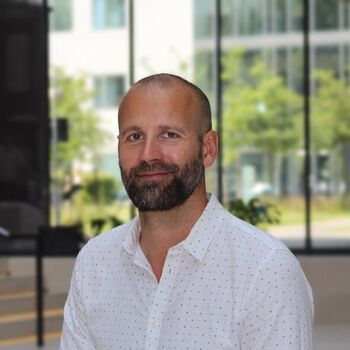

Methods and Equipment
Methods
- Hydrogen/deuterium exchange mass spectrometry (HDX-MS) for protein conformation, dynamics and interactions, including mapping the binding of drugs and ligands
- High-resolution native mass spectrometry of intact proteins and their assemblies, including non-covalent interactions, up to ~1 MDa
- Charge detection mass spectrometry (CD-MS) for single particle characterization of large heterogeneous biomolecular assemblies (e.g. vaccine nanoparticles), including composition and their interactions
- Microfluidic chips coupled to MS for rapid, automated protein sample preparation and mass analysis
Equipment
- Synapt G2-Si mass spectrometer
- Orbitrap Ascend Structural Biology Tribrid mass spectrometer
- UPLC
- State-of-the-art HDX-MS infrastructure
Contact
- Kasper Dyrberg RandProfessor
- Phone+4523712556
- E-mailkasper.rand@sund.ku.dk
- Job responsibilityGroup leader
- Employee profileSee all information
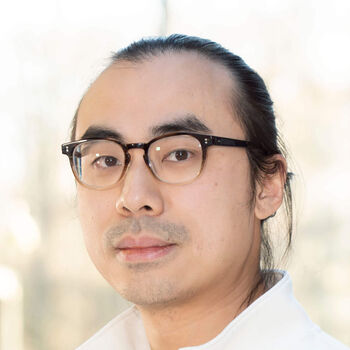 Victor Cheng YinAssistant Professor - Tenure Track
- Phone+4535333569
- E-mailvictor.yin@sund.ku.dk
- Employee profileSee all information

Group members
Loading...
Name
Title
Contact info
- Postdoc
- Visiting Student
- PhD Fellow
- Research Assistant
- PhD Fellow
- PhD Fellow