
Research focus
The Pharmaceutical Analytical Chemistry Group research focuses on the following areas:
- Separation Science & Bioanalysis
- Microfluidics
- Physicochemical profiling of drug substances
- In Vitro Performance Testing.
Group leader
Jesper Østergaard
Professor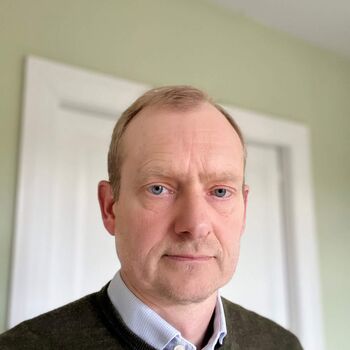

Research areas
Separation Science & Bioanalysis
- Liquid chromatography (LC), capillary electrophoresis (CE), Taylor dispersion analysis (TDA), and mass spectrometry (MS).
- Miniaturized sample preparation techniques, i.e. solid phase extraction (SPE) and electromembrane extraction (EME).
Microfluidics
- Microfluidic platforms for high-throughput analytical workflows.
- Droplet microfluidics, micro–nano particle fabrication, and microphysiological in vitro models.
Physicochemical profiling of drug substances
- TDA and CE for molecular interaction and diffusion studies.
- Biophysical characterization of biologics and nanoparticles.
In Vitro Performance Testing
- New concepts for in vitro release testing evaluation.
- Design of novel delivery systems, e.g., lipid-based injectable depots.
Methods and equipment
Advanced Separation & Detection
- Liquid Chromatography (LC), LC-MS
- Mass Spectrometry (MS), fluorescence-based detection
- Capillary Electrophoresis (CE), CE, MS
- Taylor Dispersion Analysis (TDA), Flow-Induced Dispersion Analysis (FIDA)
Microfluidics & Miniaturization
- Droplet-based systems, micro/nano particle fabrication
- Microextraction and microsampling: solid phase extraction (SPE) and electromembrane extraction (EME)
- Functional add-ons for organ-on-a-chip and microphysiological models
- Tailor-made solutions for analysis, diagnostics and related areas
Pharmaceutical Physical Chemical & Biophysical Characterization
- In vitro release testing models (for long-acting injectables),
- Interaction studies by TDA, FIDA, and CE
- Chemical kinetics, diffusion studies
- UV-Vis imaging
Master thesis student projects
If you are interested in writing your thesis with the Pharmaceutical Analytical Chemistry Group, please write an email with more information about you to:
- jesper.ostergaard@sund.ku.dk
- jorg.kutter@sund.ku.dk
- nickolaj.petersen@sund.ku.dk
- susan.larsen@sund.ku.dk
There is no deadline.
Project examples
In many experimental scenarios only very little sample volumes are accessible, e.g., when sampling blood/plasma from test animals to investigate and better understand effects and transport of pharmaceutical substances in vivo. There is a clear need to develop techniques that allow chemical analysis from very small sample volumes, and one promising approach is electromembrane extraction, which allows the extraction of (basic) drugs from various matrices (water, urine, cell medium, plasma, ...). This can give both a purification of the analyte of interest as well as an upconcentration for further analysis (by, e.g., LC-MS). We provide projects that further develop this technology and use it in the context of pharmaceutically relevant research questions.
No. of students: 1-2
Liquid chromatography (LC) is one of the main workhorses in pharmaceutical analysis and used extensively in industry. The main applied format is reversed-phase liquid chromatography using particle-based apolar stationary phases. One of the main drawbacks is often the large counter pressure generated by columns packed with very small particles. A different approach could be to use fibres instead of particles and thus achieve similar performance at lower pressures, and potentially faster separation times. This project is highly innovative in exploring the best ways to prepare fibre-based LC columns with different chemical properties and test them under various conditions for the separation of drug molecules and metabolites.
No. of students: 1-2
Many biochemical processes rely on enzymes (protein digestion, DNA cleavage, removing sugars from proteins, or strong selective capture of important molecules). However, many enzymes are rare and expensive. In order to more efficiently use enzymes, they can be immobilised on appropriate supports, such that they can be re-used again and again for new samples. This can be done even more efficiently in a miniaturised format, further reducing the amount of enzyme needed and also greatly increasing enzyme turnover by improved molecular transport. We provide projects looking at immobilising a variety of enzymes on a microfluidic support structure and testing their function by LC-UV, LC-MS or CE-UV.
No. of students: 1-2
Solid phase extraction (SPE) is a common method to extract and enrich compounds of interest from a sample. This is often used as a first step in an analysis for determining time-dependent occurrence of drug substances and metabolites in blood/serum/urine samples. Traditionally, reversed phase chromatographic material is used for SPE, but sometimes this material is insufficient; especially when the task is to capture more hydrophilic molecules. In this project, we are trying to evaluate the use of different types of stationary phases exploiting what is known as hydrophilic interaction liquid chromatography (HILIC). We will test this for sample extraction (SPE) as well as for sample separation (LC).
No. of students: 1-2
Development of in vitro release models for quality control as well as formulation design purposes is a critical activity in the characterization of parenteral depot formulations. Ideally, an in vitro-in vivo correlation should be established, however, it requires that the drug release mechanism is the same in vitro and in vivo. The project focuses on characterizing drug release from sustained release formulations for subcutaneous and/or intra-muscular administration. The aim of the project is to develop in vitro release models to achieve in depth understanding of how formulation designs as well as physiological parameters influence drug release mechanism and rate and drug transport the blood capillaries.
No. of students: 1-2
In this project, microscale analytical methodologies (CE, TDA, FIDA) will be developed for biophysical characterization/stability assessment of peptide and protein-based drugs. While these biologics have proven efficient for the treatment of a range of serious diseases, challenges remain with respect to developing and formulating these compounds. Notably, they are known to be structurally labile and current methods for assessing stability are suboptimal. We take advantage of the fact that structural alterations can be efficiently monitored through size and charge changes, change in optical properties, and/or altered function (binding ability) using microscale fluidic systems. Potential applications: stress testing of mAbs, acylated peptide self-association and ligand binding, detection and self-assembly of endotoxins in injectable, drug-protein binding kinetics.
No. of students: 1-2
This project focuses on the development of new methods to characterize nanoparticulate drug delivery systems, e.g., liposomes, cubosomes, nanocrystals. New methods based on capillary electrophoresis, Taylor dispersion analysis and/or microfluidics will be developed. It is important that the methods require limited amount of sample as nanoparticulate drug delivery systems are usually only produced in small quantities. These methods will allow us to address critical parameters such as incorporation efficiency, release, non-covalent interactions, aggregation, and adsorption.
No. of students: 1-2
The Section of Forensic Chemistry in Copenhagen has the latest technology in analytical chemistry and is committed to continuously developing and validating new and improved screen and quantitative methods for the analysis of pharmaceuticals, drugs of abuse, and designer drugs in whole blood etc. from traffic, violence, drugging or autopsy cases.
The section has a strong interest in investigations into alternative matrices, such as hair and brain tissue. Some methods are accredited and the field remains of high interest as these alternative matrices offer new advantages; for example, hair analysis allows one to look back in time, because consumed drugs enter the bloodstream and are thereby stored in the developed hair. The drug will then grow out within the hair, and by segmenting hair into smaller pieces, it is possible to achieve a chemical history of drug use and pattern. These investigations are often developed by use of the sensitive and selective LC/MS/MS technique, thus GC/MS and ICP-MS are available.
No. of students: 1-2
Ask for current possibilities.
Group members
- Laboratory Technician
- Master Thesis Student
- Associate Professor Emeritus
- Master Thesis Student
- Research Assistant
- Associate Professor
- PhD Student
- Master Thesis Student
- Research Assistant