Lo Leggio Group - Crystallography

Research focus
We are primarily interested in proteins and their interactions with other proteins, carbohydrates and DNA. We use crystallography as the primary technique for structure determination, including method development.
In order to determine how protein structure dictates biological function we complement crystallography with protein chemistry, biochemical and other biophysical techniques.
Current and recent projects focus on carbohydrate modifying enzymes that can help in the green transition or are involved in disease, bacteriophage regulators, and protonation state of proteins.
Group leader
Leila Lo Leggio
ProfessorOffice: C310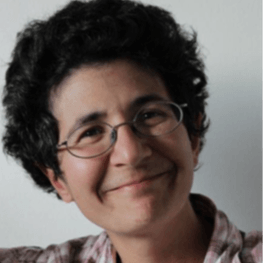

Research
My group works on macromolecules structure and function, primarily proteins, in particular enzymes, and their interactions with each other and other macromolecules (nuclei acids and polysaccharides).
Biomass is an important renewable resource, and much of it is composed by polysaccharides, especially when coming from plants, like in food or agricultural waste.
These polysaccharides are often crystalline and embedded in complex matrices also involving other components like lignin, leading to high recalcitrance to breakdown.
This is an obstacle for using renewable resources for producing eg bioethanol or biomaterials. In my group we study the mechanisms of enzymes involved in plant biomass degradation at the atomic level, as well as their interactions with complex plant biomass components.
We study for example glycoside hydrolases, lytic polysaccharide monooxygenases and glucuronoyl esterases. Below an example of a covalent intermediate trapped in a variant of a glucuronyl esterase, and enzyme involved in decoupling lignin and polysaccharides.
In the paper, part of an ongoing collaboration with Johan Larsbrink at Chalmers University of Technology, we use crystallography, biochemistry and computation to better understand the mechanism and learn to utilize these enzymes beneficially.

The other main research theme in my lab are DNA binding transcription factors, particularly the ones involved in lysogeny-lysis switches.
These switches decide whether temperate phages go into the lysogenic or lytic cycle (killing the bacteria) and they are important in transfer of genetic material between bacteria.
We are particularly interested in switches involving the CI-MOR protein-protein interaction shown below, particularly the ones from Gram-positive pathogenic bacteria bacteriophages (like the Staphylococcus aureus phi13 phage).
In these projects we collaborate with other structural biologists and microbiologists.

Although we use many techniques, our favourite is crystallography. Aside from ‘just’ determining structures of proteins and their interaction with small and large molecules as in the example above, we also use more advanced crystallography. For example:
We are avid users of synchrotron facilities like:
We cooperate with several facility scientists. I also work very closely with the other crystallographers in the Biological Chemistry Section:
- Anders Kadziola
- Pernille Harris
- Sine Larsen
I am also a member of:
The Centre for Medicinal Chemistry at the University of Copenhagen
Projects
In a typical project, you might produce and/or crystallize a protein/enzyme alone or in complex with other macromolecules or small ligands, and then determine its structure by crystallography, or use complementary techniques to gain structural and functional information.
These are core methods used in structure-based drug design and protein engineering in industry.
In a current project, we apply enzymes to make environmentally friendly plasticizers. Projects focusing on computational analysis or fundamental methods can be arranged.
If you are interested in understanding how structure and chemistry make biological macromolecules function, we can probably find a project to fit your specialization.
Collaborations
We collaborate with many bio-chemistry groups in Denmark and the world, for example Chalmers University in Sweden.
We also collaborate with researchers at synchrotron and neutron diffraction facilities.
Many of the projects you can be involved in are part of such collaborations, so you will most likely meet and work with scientists from diverse backgrounds, physically or virtually.


Associated researchers
- Associate Professor
- Professor
Contact
-
Phone+4535320295
-
E-mailleila@chem.ku.dk
-
Employee profileSee all information